Designing with responsibility in mind: Procurement, materials and the circular economy
Our B Corp™ journey gave us an opportunity to look at that responsibility more broadly.

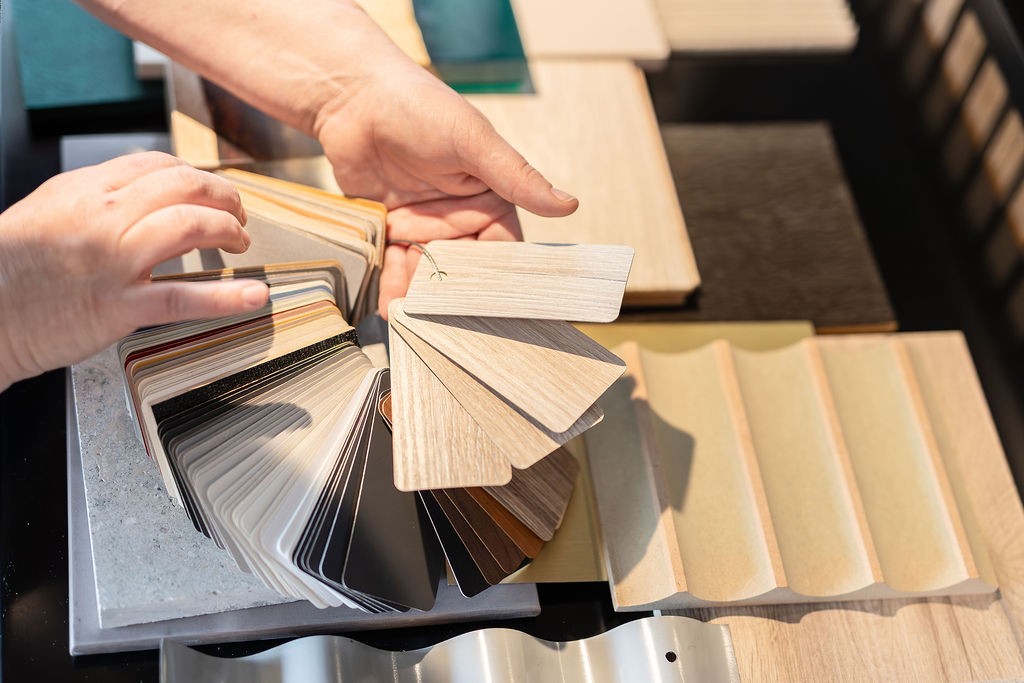
It is already further encouraging us to consider not only what we design, but the materials we specify, the suppliers we choose, how those materials are manufactured and transported, how much waste is generated and what happens to products at the end of their useful life.
Responsible procurement has therefore become part of a much bigger conversation about how Design ID designs and delivers better spaces.
Responsible design starts with responsible procurement
The specification stage is an important opportunity to make better choices.
We consider procurement from a whole-life cost perspective and adopt a preference for ethical and certified products where appropriate. Rather than focusing solely on the immediate cost of a material or product, we consider its credentials, longevity and wider impact.
That also means looking carefully at our supply chain and we aim to select suppliers that share our values and sustainability goals, while integrating relevant business requirements into our sub-contracts and supporting suppliers to meet those needs.
Having consistent goals for our supply chain helps us measure strategic performance and understand where improvements can be made.
For clients, this creates a more considered approach to specification. Sustainability becomes part of the decision-making process rather than an additional layer applied after the design has already been established.
Making material choices measurable
On projects, materials brought to site for installation are checked by the Project Sustainability Advisor against the project’s sustainability aims, objectives and targets.
Their credentials and relevant sustainability certifications are recorded on a project materials database. That may sound like a simple administrative process, but it’s an important one. If we are serious about responsible procurement, we need to be able to demonstrate what has been selected and understand how those choices perform against the targets we’ve agreed.
The results are shared with suppliers, helping to create a more collaborative approach to environmental management and encouraging everyone involved to take ownership of the project’s sustainability objectives.
Designing out waste
For us, one of the most important principles is that waste reduction should begin at the design stage.
The most sustainable waste is often the waste that never needs to be created.
We therefore prioritise efficient design and production methods to minimise material waste from the outset. Where surplus materials are generated, we look for opportunities to repurpose them within our operations or donate them for reuse.
Materials that can be recycled are carefully sorted and processed, while we deliberately seek to avoid landfill wherever possible. We also use an internal monitoring and reporting tracker to help us understand our performance and identify opportunities to improve.
For us, circularity isn’t simply about what happens to something after we’ve finished with it. It’s about thinking about that journey much earlier, when we are designing, specifying and procuring in the first place.
The environmental impact of a project doesn’t stop at the drawing board
Responsible design also needs to be supported by responsible project management.
Our environmental management approach includes regular monitoring and review of our energy, waste and water consumption. We want a shared and positive environmental culture across the business, which is why appropriate training, information and environmental toolbox talks form part of our approach.
We also maintain systems designed to prevent pollution and minimise environmental harm, while internal audits and transparent reporting help us identify areas for improvement.
The important thing is that these aren’t treated as one-off exercises. Environmental performance needs to be reviewed continuously if we’re going to make meaningful progress.
What B Corp™ changed and what comes next
I think one of the biggest misconceptions about B Corp certification is that it represents an endpoint.
In reality, becoming a B Corp has made us more aware of how much more there is to do. It has given us a stronger framework for asking difficult questions about our impact and for holding ourselves accountable for the answers.
Looking ahead, we want to continue developing innovative solutions with our supply chain, improving the materials and products we specify, reducing waste and sharing best practice.
We also want to keep challenging the idea that sustainability has to come at the expense of good design. For us, the two should work together.
A well-designed space should consider how it looks and performs, but also where its materials come from, how responsibly they have been produced, how long they are likely to last and what might happen to them afterwards.
That’s the opportunity we see in responsible design and procurement: not simply to reduce the negative impact of projects, but to make better decisions from the outset and create greater value for our clients over the long term.
Our B Corp certification recognises the progress we’ve made. The work now is making sure we keep moving forward.