Office interior design trends for 2026 and beyond: Designing workplaces for people, performance and the future
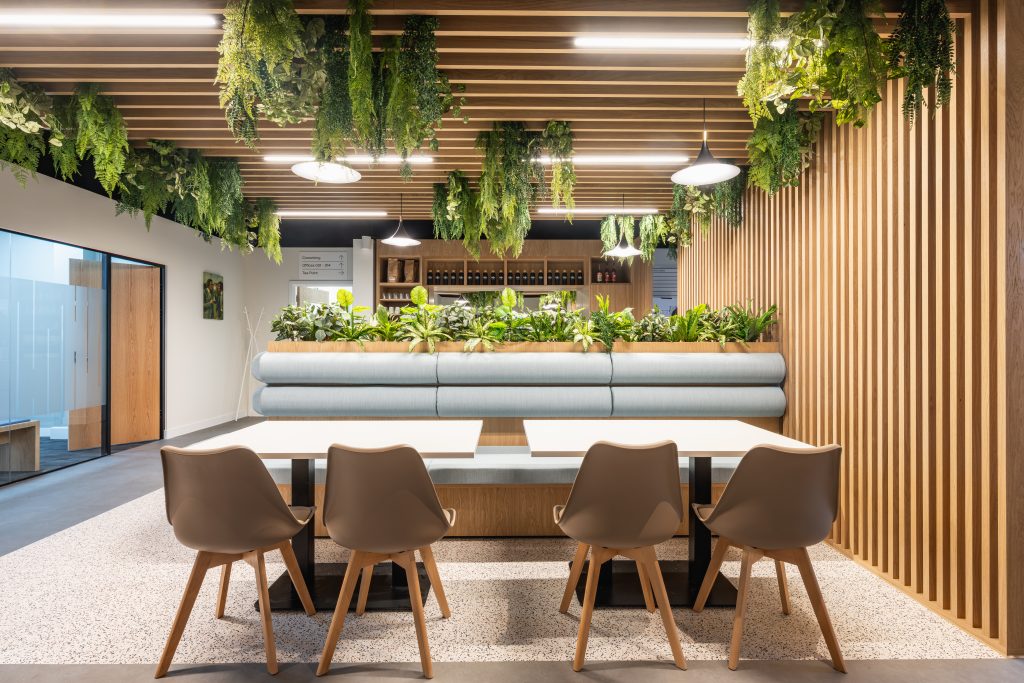
As businesses continue to adapt to hybrid models, shifting employee expectations and new technologies, commercial interior design is evolving faster than ever.
In 2026 and beyond, the most successful workplaces will not simply be designed for function or aesthetics. They will be built as adaptive environments that support people, performance, and long-term business resilience.
As a commercial interior design company with over 20 years of experience creating people-centred environments, we see this shift clearly: offices are becoming more flexible, more human and more experiential than ever before.
1. Human-centred design becomes the foundation of commercial interiors
One of the strongest shifts in interior design for commercial spaces is the continued move toward human-centred thinking.
Rather than designing around desks or departments, the focus is now on how people feel and perform within a space. As a leading commercial interior design studio, we are seeing how wellbeing, choice and experience are all core design principles.
Key elements include:
- Access to quiet zones and collaboration spaces
- Improved acoustics and sensory comfort
- Natural materials, light, and biophilic design
- Flexible layouts that support different working styles
This approach ensures that commercial design interiors actively support productivity and employee wellbeing.
2. Flexible and activity-based workspaces become the norm
By 2026, flexibility is no longer a trend – it is a baseline requirement in commercial building interior design.
Offices are increasingly designed as activity-based environments where employees choose spaces depending on the task at hand.
We are seeing continued growth in:
- Modular furniture and reconfigurable layouts
- Hot-desking and hybrid-ready work zones
- Multi-purpose meeting and collaboration areas
- Informal breakout and social hubs
Adaptability is now one of the most critical drivers of performance in modern commercial interior design, helping businesses respond quickly to change and optimise space usage.
3. Hospitality-led commercial design interiors take centre stage
A defining influence in 2026 is the continued crossover between hospitality and workplace environments.
As a hospitality-led studio, we see offices increasingly designed to feel welcoming, intuitive and experience-driven rather than corporate or rigid.
This shift in commercial design interiors includes:
- Café-style breakout spaces and social hubs
- Lounge-inspired client areas
- Warm, layered lighting schemes
- Residential and hospitality-style material palettes
This approach creates workplaces that people genuinely want to spend time in, improving engagement and culture.
4. Sustainability becomes a core design standard
Sustainability is no longer optional in commercial interior design – it is a fundamental expectation.
In 2026 and beyond, sustainable design is defined by longevity, adaptability and responsible material use rather than short-term visual trends.
Key priorities include:
- Low-carbon and responsibly sourced materials
- Circular design principles and reuse strategies
- Energy-efficient lighting and systems
- Long-life, adaptable furniture solutions
Businesses are also recognising that sustainable design reduces long-term operational costs and supports ESG commitments.
5. Technology-integrated workplaces continue to evolve
Technology is deeply embedded in modern commercial interior design services, enabling smarter and more responsive environments.
In 2026 workplaces, we see increased integration of:
- Smart booking systems for desks and meeting rooms
- Occupancy sensors and space analytics
- Hybrid meeting infrastructure
- Automated lighting and environmental controls
These systems help businesses make data-led decisions about how their commercial building interior design is performing in real time.
6. Offices designed as multi-functional ecosystems
The office is no longer a single-purpose environment. Instead, it is becoming a multi-functional ecosystem that supports a variety of working modes throughout the day.
A modern commercial interior design company now approaches space planning by creating:
- Focus zones for deep work
- Collaborative hubs for team interaction
- Social and cultural spaces for connection
- Client-facing areas that reflect brand identity
This layered approach ensures that commercial design interiors deliver both flexibility and purpose.
7. Branding and experience become more subtle and integrated
In 2026, branding in the workplace is becoming more experiential and less overt.
Rather than heavy visual branding, office design is focusing on:
- Spatial storytelling through layout and flow
- Subtle brand colour integration
- Material selection aligned with identity
- Design that reflects company values through experience
This creates spaces that feel authentic, lived-in, and aligned with organisational culture.
8. The rise of sensory and tactile interior design
Another major trend shaping commercial interior design services is the increasing focus on sensory experience.
Offices are becoming richer in texture, tone and materiality, designed to engage multiple senses.
This includes:
- Textured wall finishes and acoustic surfaces
- Layered lighting environments
- Natural timber, stone, and soft materials
- Carefully considered soundscapes
These elements contribute to environments that feel more human and immersive.
Designing workplaces for 2026 and beyond
The future of commercial interior design is defined by adaptability, experience and human connection.
Once believed to be static spaces, offices are now evolving ecosystems that must support people, culture and performance in equal measure.
By combining over 20 years of expertise with a hospitality-led, people-first approach, we create commercial design interiors that are flexible, sustainable and future-ready.
The result is simple: workplaces that don’t just look good – but actively work harder, adapt faster and inspire people every day.