Feasibility &
zoning
Before design begins, the right questions need answering to help guide you in the right direction. Feasibility and zoning transforms early ideas into clear, viable spatial strategies – giving you the confidence to move forward, refine your brief or challenge assumptions before time and cost escalate. We analyse your space against your operational, commercial and brand objectives to determine how it can perform.
Through a combination of technical assessment and strategic thinking, we test how your vision translates into reality. Whether you’re assessing a new site, reconfiguring an existing space, or validating an investment decision, we provide the insight needed to understand what’s possible, and what’s not.
This is not just about fitting furniture, covers or rooms into a plan. It’s about aligning space with purpose – ensuring it works for your people, your customers and your long-term goals.
Getting this stage right changes everything that follows. Our feasibility and zoning process enables confident, evidence-based decision-making, helping you identify risks before they become issues, support acquisitions, leases or funding conversations, unlock the full potential of a space, and avoid unnecessary cost and delay. In some cases, it provides the clarity to move forward; in others, the insight to pause or rethink – both of which are equally valuable.
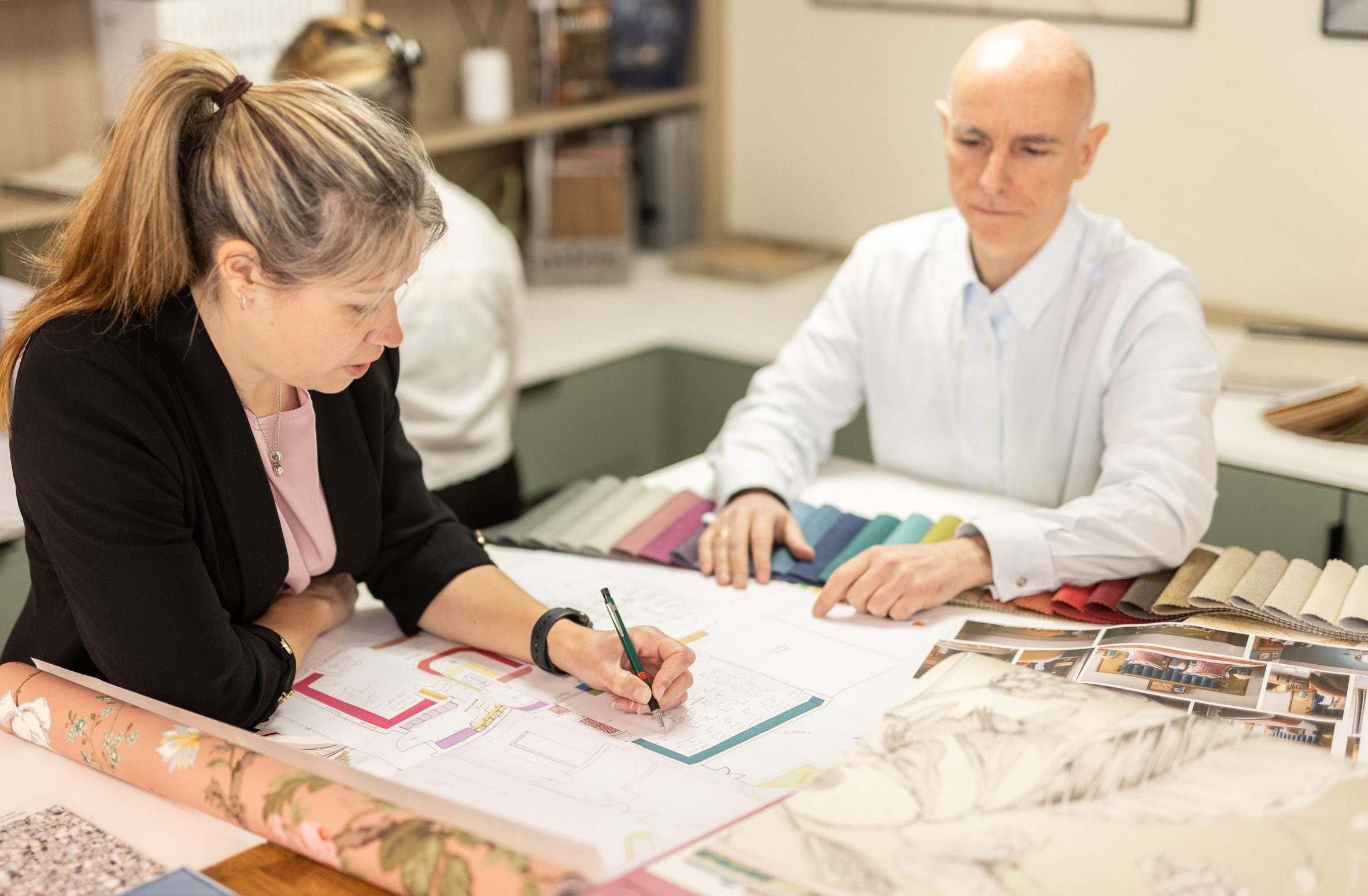
To further support commercial and operational decision-making, we can also develop a detailed accommodation schedule as part of this process – providing a direct comparison between existing and proposed layouts, showing how capacity evolves through the design. Depending on sector, this may include cover counts, workstation numbers or other occupancy metrics, broken down into meaningful detail such as two-person, four-person and six-person tables, booth seating, shared desks or touchdown points. This level of clarity allows you to quickly understand the commercial implications of spatial decisions and benchmark performance against project objectives.
Allowing operators to visualise how a space will function and feel, we develop early concepts into clear, workable layouts – often referred to in the pub sector as a Sketch Scheme – which typically includes a briefing, survey or dimensions check (if required), existing plans, proposed plans and a mood board to provide the information for a quantity surveyor to provide a budget cost, giving you the full picture for CAPEX approval.
Our focus is to provide you with a clear, considered layout options supported by annotated plans that explain key decisions to bring the space to life. This is complemented by strategic recommendations and a defined direction for the next stage of design, all presented in a way that supports internal stakeholders, investors and wider decision-makers.
Our feasibility and zoning approach
Understanding your brief
We start by defining what success looks like.
From operational requirements and customer journeys to brand positioning and future growth, we take the time to understand the drivers behind the space – not just the space itself.
Always maintaining the integrity of your brand, we will ensure your brand design guides are followed (or help create one if required).
Assessing feasibility
We practically determine what is feasible to be created within the space, and what can be adapted or repurposed.
In many cases specialist expertise is needed, such as for planning permissions or consent requirements – and we can introduce recommended specialist third parties to seamlessly assist.
Developing zoning options
We explore multiple layout scenarios to test different approaches.
This allows us to:
- Optimise layout and flow
- Explore alternative operational models
- Benchmark against sector best practice
Rather than presenting a single answer, we provide informed recommendations – each with clear rationale.
Aligning with commercial reality
Every space has to perform and return on your investment.
We overlay spatial thinking with commercial insight, for instance:
- Maximising your food and beverage offer
- Helping maximise footfall
- Help increase dwell time
- Creating new or adapted spaces
- Encouraging ‘pop-ins’ and ‘grab and go’
This ensures your decisions are grounded not just in design – but in commercial outcomes.
Designed with responsibility in mind and a foundation for what comes next
We approach feasibility with a long-term perspective, delivering design with impact from the very outset. By prioritising efficient use of space, adaptability and the potential to reuse existing elements, we responsibly shape interiors that not only minimise environmental harm but are built to stand the test of time. The result is considered, future-ready spaces that support your sustainability objectives while creating environments that inspire connection and a genuine sense of belonging.
Feasibility and zoning are not a standalone exercise – they are the foundation of everything that follows.
The decisions made here inform concept design, programme, cost planning and delivery, ensuring a more streamlined, informed and successful project.
Have an interior design need?
Please contact our team about your requirements. We would love to answer any questions and establish where we can help.
Frequently asked questions
Feasibility and zoning define how a space can realistically perform before design begins. It tests your vision against operational, spatial and commercial requirements to establish what’s viable.
At Design ID, we combine technical assessment with strategic thinking to translate early ideas into clear, workable layout options — giving you the confidence to move forward with clarity and direction.
Feasibility and zoning should be undertaken at the earliest stage of a project — whether assessing a new site, reconfiguring an existing space or validating an investment decision.
Design ID uses this stage to challenge assumptions, explore multiple layout scenarios and identify risks early. This ensures decisions are evidence-based, reducing costly changes later in the process.
Feasibility is not just about what fits — it’s about what performs. Every spatial decision needs to support operational efficiency, customer experience and return on investment.
Design ID overlays zoning strategies with commercial insight, testing capacity, flow and layout performance to maximise dwell time, footfall and revenue opportunities. The result is a clear, strategic foundation for confident decision-making and successful delivery.